

Opendoor’s (NASDAQ:OPEN) Q1 CY2026 Sales Beat Estimates

Technology actual property firm Opendoor (NASDAQ:OPEN) introduced better-than-expected income in Q1 CY2026, however gross sales fell by 37.6% yr on yr to $720 million. Its GAAP lack of $0.18 per share was 86.6% under analysts’ consensus estimates.
Is now the time to purchase Opendoor? Find out by accessing our full research report, it’s free.
Opendoor (OPEN) Q1 CY2026 Highlights:
- Revenue: $720 million vs analyst estimates of $664.5 million (37.6% year-on-year decline, 8.3% beat)
- EPS (GAAP): -$0.18 vs analyst expectations of -$0.10 (86.6% miss)
- Adjusted EBITDA: -$31 million (-4.3% margin, 3.3% year-on-year decline)
- Operating Margin: -22.1%, down from -4.9% in the identical quarter final yr
- Free Cash Flow was -$250 million in comparison with -$283 million in the identical quarter final yr
- Homes Sold: down 1,025 yr on yr
- Market Capitalization: $5.23 billion
“As of April 1st, Opendoor is adjusted EBITDA profitable, on a 12-month go-forward basis. The October cohort was just the start. A full quarter later, we’ve gone from a claim to a track record. Our 4Q25 and January 2026 cash acquisition cohorts have the best combination of margin, margin stability, and resale velocity of any corresponding cohort in company history (excluding the COVID-era cohorts)1. And, each of our October, November, December, and January cohorts are selling faster than any corresponding cohort since COVID. Acquisition contracts are up 2x quarter-over-quarter, back to levels we haven’t seen since 2022. Aged inventory has been cut from half the book to one-tenth while scaling volume. As a result, resale contribution margin is at its highest level in nearly two years,” said Kaz Nejatian, CEO of Opendoor.
Company Overview
Founded by actual property guru Eric Wu, Opendoor (NASDAQ:OPEN) affords a technology-driven, handy, and streamlined course of to purchase and promote houses.
Revenue Growth
An organization’s long-term efficiency is an indicator of its total high quality. Any enterprise can expertise short-term success, however top-performing ones get pleasure from sustained development for years. Over the final 5 years, Opendoor grew its gross sales at a 13.7% compounded annual development fee. Although this development is suitable on an absolute foundation, we have to see extra than simply topline development for the patron discretionary sector, which may show important earnings volatility. This means our bar for the sector is especially excessive, reflecting the non-essential and hit-driven nature of the services and products supplied. Additionally, five-year CAGR begins round Covid, when income was depressed then rebounded.
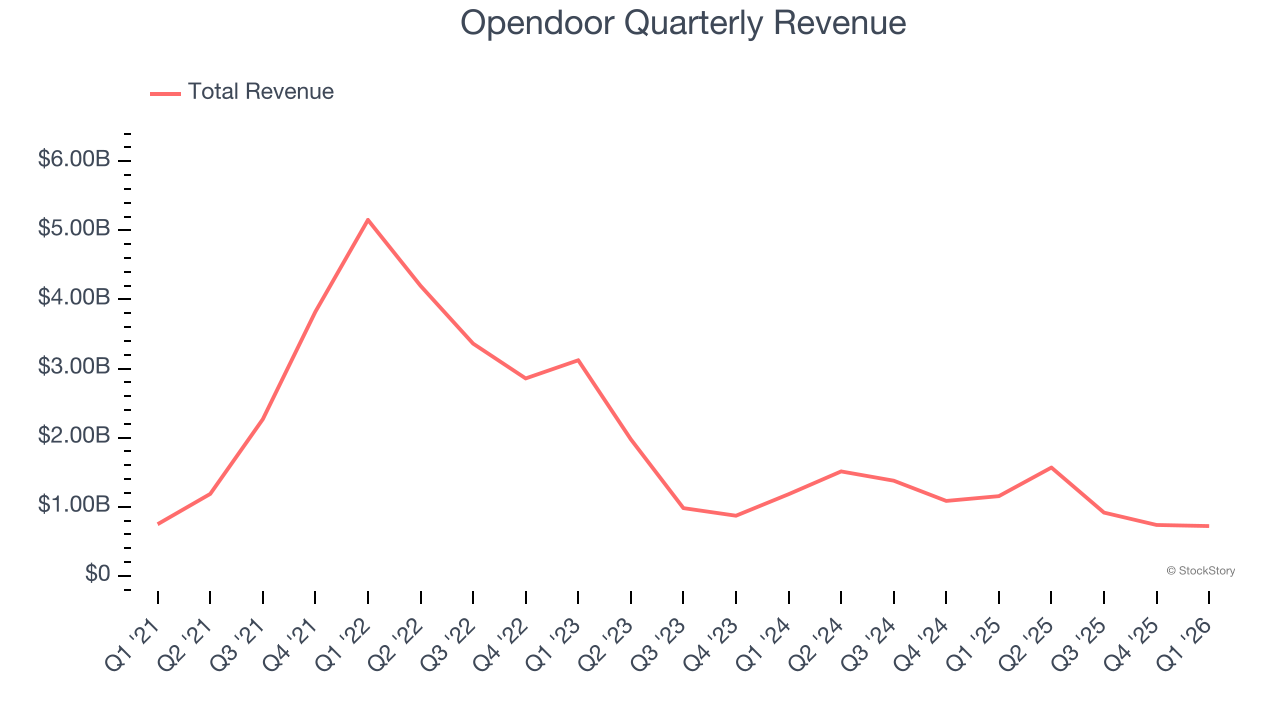
Long-term development is a very powerful, however inside client discretion, product cycles are quick and income could be hit-driven attributable to quickly altering tendencies and client preferences. Opendoor’s efficiency exhibits it grew previously however relinquished its features during the last two years, as its income fell by 11.3% yearly. 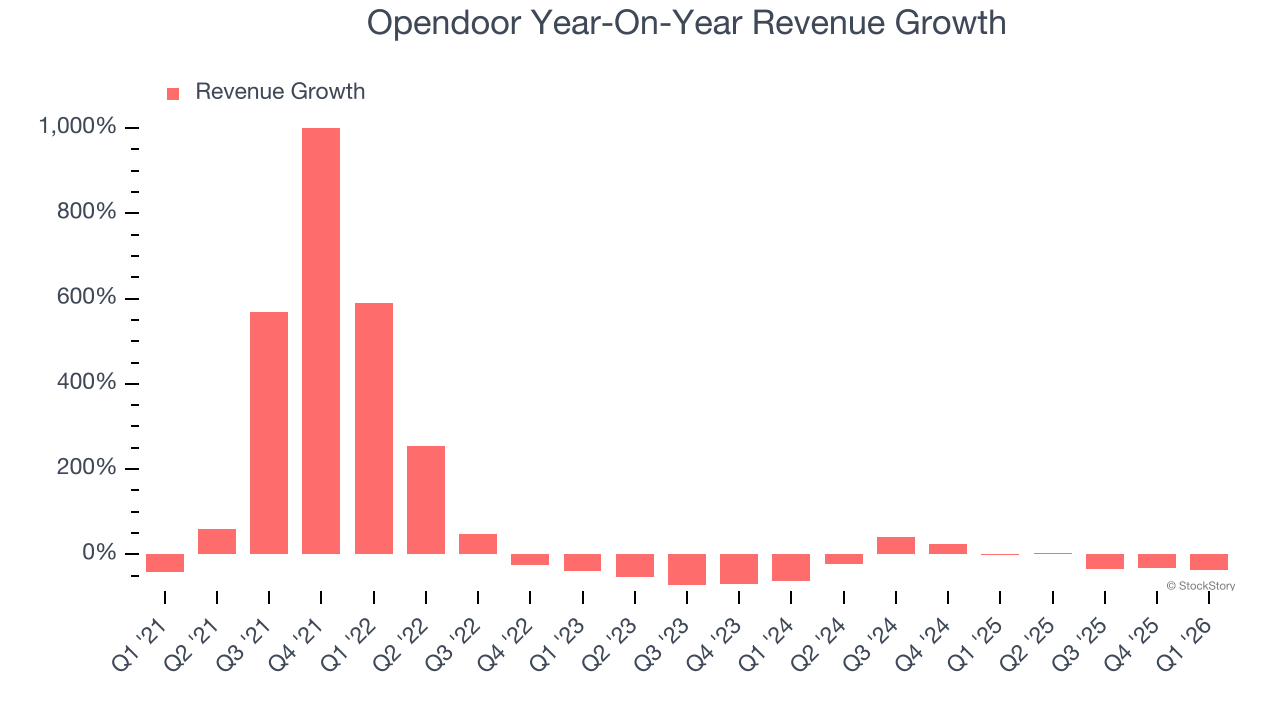
We can dig additional into the corporate’s income dynamics by analyzing its variety of houses offered, which reached 1,921 within the newest quarter. Over the final two years, Opendoor’s houses offered averaged 12.2% year-on-year declines. Because this quantity aligns with its income development throughout the identical interval, we are able to see the corporate’s monetization was pretty constant. 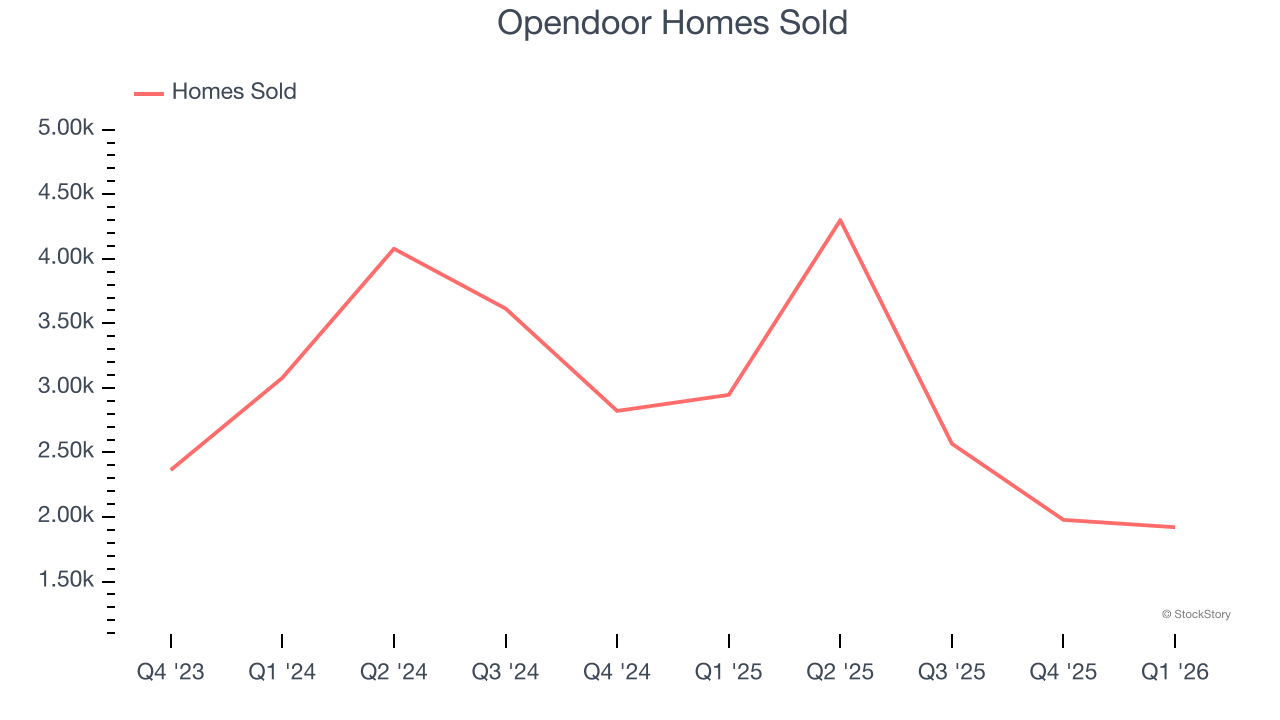
This quarter, Opendoor’s income fell by 37.6% yr on yr to $720 million however beat Wall Street’s estimates by 8.3%.
Looking forward, sell-side analysts anticipate income to develop 26% over the subsequent 12 months, an enchancment versus the final two years. This projection is eye-popping and signifies its newer services and products will gas higher top-line efficiency.
ONE MORE THING: The $21 AI Application Stock Wall Street Forgot. While Wall Street obsesses over who’s constructing AI, one firm is already utilizing it to print cash. And no one’s paying consideration.
AI chip shares commerce at ridiculous valuations. This firm processes a trillion client alerts month-to-month utilizing AI and trades at a 3rd of the worth. The hole will not final. The establishments will determine it out. You have to see this primary. Read the FREE Report Before Their Notice.
Operating Margin
Opendoor’s working margin has been trending down during the last 12 months and averaged unfavorable 7.5% during the last two years. Unprofitable client discretionary corporations with falling margins deserve further scrutiny as a result of they’re spending a great deal of cash to remain related, an unsustainable observe.
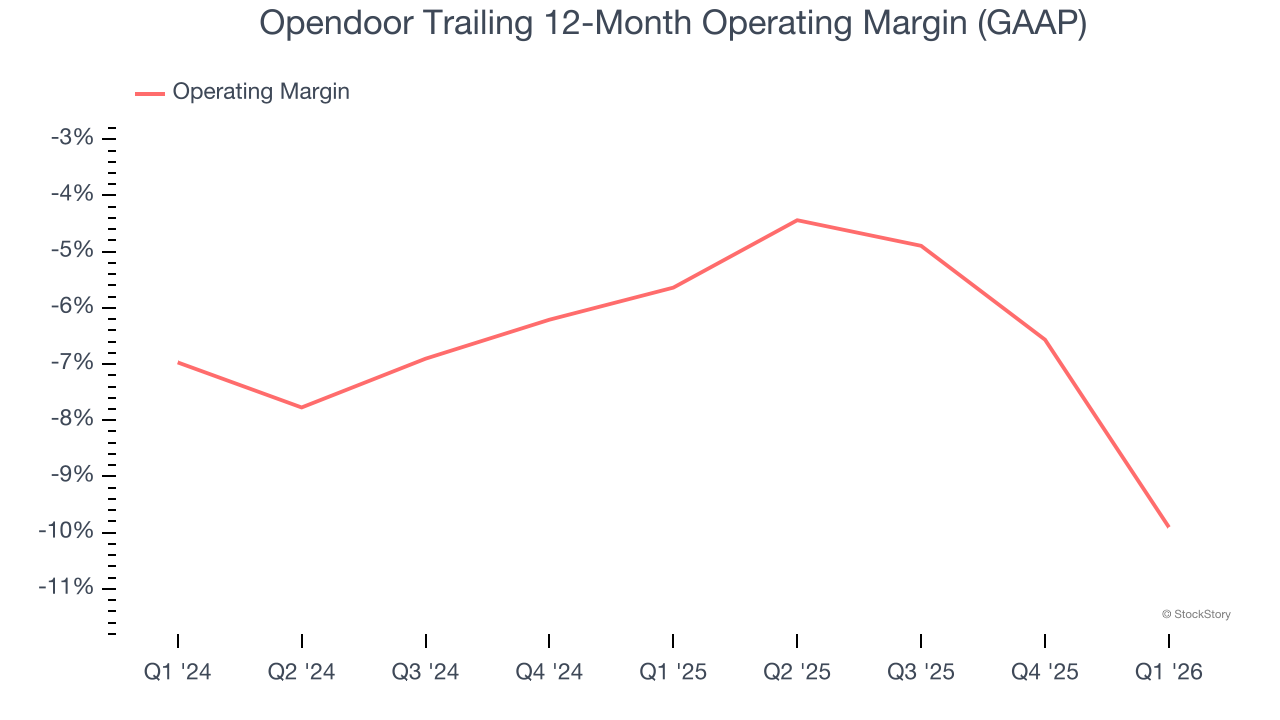
Opendoor’s working margin was unfavorable 22.1% this quarter. The firm’s constant lack of earnings increase a flag.
Earnings Per Share
We monitor the long-term change in earnings per share (EPS) for a similar cause as long-term income development. Compared to income, nonetheless, EPS highlights whether or not an organization’s development is worthwhile.
Although Opendoor’s full-year earnings are nonetheless unfavorable, it lowered its losses and improved its EPS by 7.4% yearly during the last 5 years. The subsequent few quarters might be important for assessing its long-term profitability.
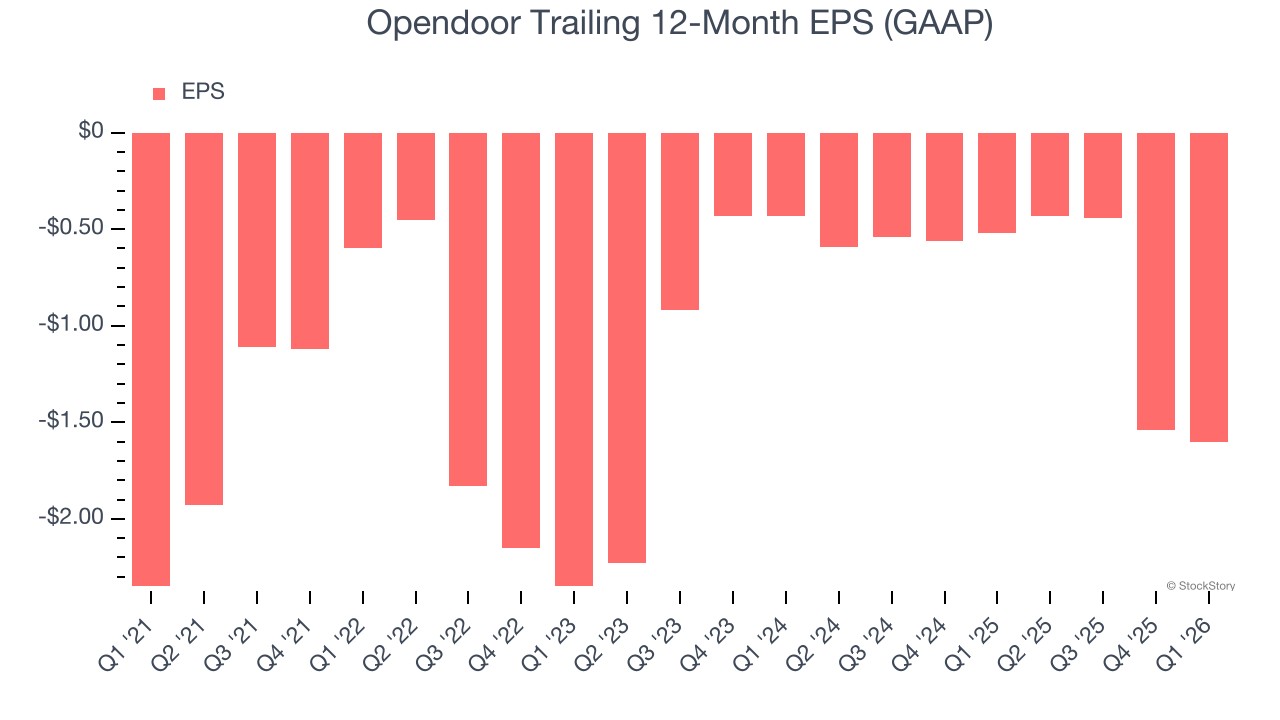
In Q1, Opendoor reported EPS of unfavorable $0.18, down from unfavorable $0.12 in the identical quarter final yr. This print missed analysts’ estimates. Over the subsequent 12 months, Wall Street expects Opendoor to enhance its earnings losses. Analysts forecast its full-year EPS of unfavorable $1.60 will advance to unfavorable $0.21.
Key Takeaways from Opendoor’s Q1 Results
We have been impressed by how considerably Opendoor blew previous analysts’ income expectations this quarter. We have been additionally completely happy its EBITDA outperformed Wall Street’s estimates. On the opposite hand, its adjusted working earnings missed and its EPS fell wanting Wall Street’s estimates. Overall, this was a softer quarter. The inventory traded up 2.5% to $5.41 instantly following the outcomes.
So do you have to put money into Opendoor proper now? What occurred within the newest quarter issues, however not as a lot as longer-term enterprise high quality and valuation, when deciding whether or not to take a position on this inventory. We cover that in our actionable full research report which you can read here (it’s free).
