

David Attenborough and the Voice That Revealed a Planet
Four decades ago, Sir David Attenborough traveled to Nigeria to examine a complex insect society built by more than a million constituents with no more than five brain cells apiece. It was a termite mound, standing 15 feet tall, with imposing concrete-like spires built entirely of clay and saliva. Local Nigerian workers were clearing the area for farmland, which meant that this termite manor would have to be demolished. But not before Attenborough and a documentary film crew burrowed more than 6 feet beneath the surface to capture one of nature’s most extraordinary feats of architectural engineering for the 1990 series The Trials of Life.
A termite colony is multitiered and manifold. There is the queen and her round-the-clock nursery workers. There are gardeners. There are laborers. There are soldiers. This termite species is called Macrotermes bellicosus. Macrotermes means “big termite.” Bellicosus means “warlike.” The soldiers are distinct, with an engorged head and hedge-trimmer pincers comically larger than their abdomen—imagine a stone crab claw affixed to a foam earplug. “These really aggressive soldier termites will attack anything that comes into the mound,” Mike Gunton, the creative director and executive producer of the BBC’s Natural History Unit, told me. “Including David Attenborough.”
The activity among the hundreds upon thousands of termites generates a considerable amount of heat within the fortress. Enough to kill off the entire colony if there weren’t a means of reprieve. Luckily, there is. The film crew bored two holes 6 feet deep: one for the camera, and one for Attenborough to wriggle his way in through. The camera revealed a remarkable underground air-conditioning system, one of the most impressive structures that Sir David had ever seen. The entire colony rested on a plinth of clay, and on the underbelly of that structure were rows of razor-thin slats of mud that absorbed the heat and moisture and cooled the entire colony in the evaporation process.
Attenborough crawled into the hole, but only partially. The most trusted voice of our time could be heard on Gunton’s headphone monitors, but instead of Attenborough’s immortal timbre, the only utterances coming through were a procession of discomforted grunts and yelps. “Ooh, oww!” The soldiers had descended on him. Still, he persevered, delivering his piece about the termites’ bespoke AC unit. Unfortunately, he hadn’t crawled deep enough to come into the lighting. The camera operators only saw Attenborough’s feet twitching. The shot was a disaster. He was pulled out of the hole. His clothes were covered in mud, his body was covered in bites, his hair was mussed, his shirt was torn. Gunton walked over to Attenborough sheepishly. “David, I’m sorry, but you didn’t come into the light,” Gunton said. “You’re going to have to do this again.”
Attenborough stared at Gunton, heaved a sigh, and composed himself. “Do I? … Of course.”
The crew reset the shot and fixed the lighting. Sir David changed his shirt. Together, they all did a prayer to the termites. Action. “He crawls in, hits his mark absolutely perfectly, delivers the piece to camera perfectly,” Gunton said. “The termites don’t attack him.”
Cut! Gunton was thrilled. Attenborough was wrested once more from the termite lair and wryly asked, “Absolutely sure? Don’t want to do another one?”
The termite mound was a quintessential Attenborough scene: It brought the viewer closer to an ineffable process of nature than ever thought possible, forming a vivid memory out of something you had no idea existed. That ability to illuminate the unseen is one of Attenborough’s greatest gifts as an educator, a storyteller, and a human being. It is a by-product of his ethos and his iconic half-hushed delivery—intimate enough to make you feel like you’re being told a secret of the natural world, quiet enough so as not to draw any undue attention away from the natural spectacle at hand. The Ringer’s own Brian Phillips once described Attenborough’s voice as “somewhere between the voice of a golf announcer and the voice of a loving god.” It is certainly considered one of the nice voices in historical past, exactly as a result of it is historical past. Other than Queen Elizabeth II, who was first publicly recorded on a radio broadcast when she was a 14-year-old in 1940, there may not be one other individual whose voice has been so totally documented in every of the previous eight a long time.
On May 8, Sir David will mark 100 years of life on this planet. More than 70 of these have been devoted to bringing us nearer to nature. Attenborough grew up in a world formed by the Great Depression, started his profession on air throughout the child increase, and has endured lengthy sufficient to see his nature documentaries premiere 5 generations later, at the floor ground of Generation Beta. A century’s value of collected data is each a privilege and a burden in the Anthropocene—the current geological period, outlined by humanity’s industrialized exploitation of the atmosphere and its finite sources. It’s all current in his voice. In his outdated age, Attenborough’s phrases are held collectively largely by the dueling poles of enthusiasm and concern; as soon as shaped, they go away a path and dissipate like vapors. Yet his voice is paradoxically extra highly effective than it ever was in the vigor of his youth. It doesn’t increase or bellow. It resonates like a conscience.
In that sense, David Attenborough just isn’t the voice of a era, however of generations.
David Attenborough with an orangutan and her child at London Zoo in 1982
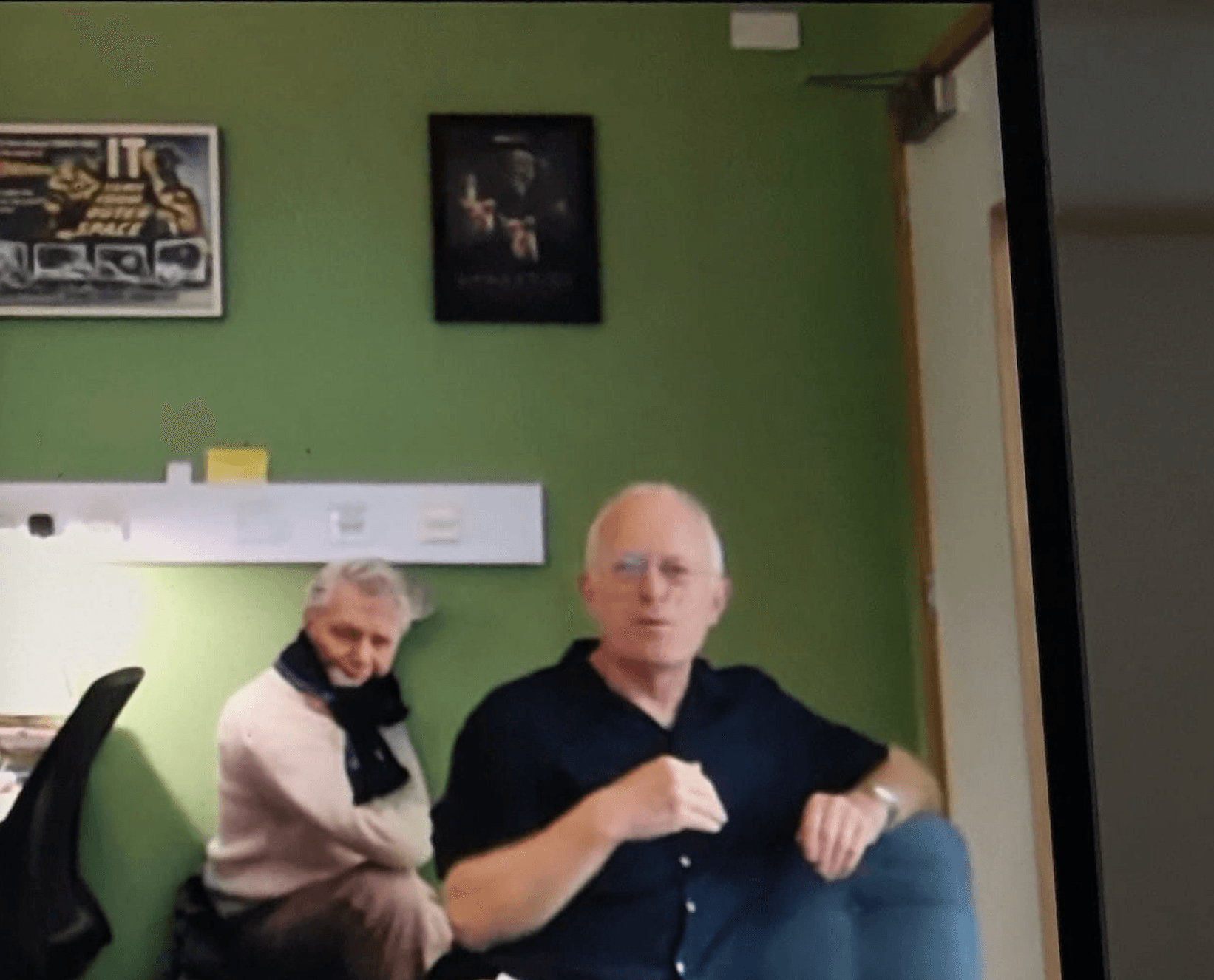
The partitions of Gunton’s South West England workplace have been painted a heat, yellow-cast inexperienced, and a framed poster of the 1953 sci-fi horror film It Came From Outer Space hung behind his desk. He sat casually on a tufted lounge chair, with one arm resting over the cushion. Just behind Gunton was Sir David himself, barely askew, his neck wrapped in a black scarf, his chin resting on his fist, not in contrast to a Rodin sculpture. They have been so shut that, in Gunton’s enthusiastic gesticulations, his elbow sometimes dug proper into Attenborough’s knee. But David didn’t budge. His simple gaze was relentless. It was like he was elsewhere utterly.
“That cutout has been with me in every office I’ve had for 35 years,” Gunton instructed me. “This is one of my most treasured possessions. I sometimes forget that I have it in the room. … And because of the way the Zoom perspective works, it looks like we’re sitting next to each other.”
He remembers when this specific picture of Attenborough was taken; he was there with him, alongside a rocky shoreline 60 miles away from this workplace again in 1989, taking pictures a scene about hermit crabs for Trials of Life. Gunton recalled sitting by a rock pool as Attenborough took out an empty shell from his pocket. “I’m just going to introduce a new house into the housing market,” Attenborough stated, as he tossed the shell into the water and watched the curious hermit crabs take excursions of the new property.
Working with David was imagined to be a one-off, a undertaking to cross off the bucket record in Gunton’s 20s. He’d first met Attenborough a couple of years earlier, throughout an early BBC manufacturing assembly for The Trials of Life, what was then regarded as Attenborough’s final documentary sequence. “It was a kind of boyhood dream, really, to meet him,” Gunton instructed me. “I’d always had this idea, I’d love to work on an Attenborough series. So I thought if ever I’m going to do it, I’d better try and get on this project because there won’t be another chance.”
It seems that there have been many, many extra possibilities. That was almost 40 years and numerous tasks in the past. Attenborough as soon as once more mulled over a potential retirement in 2005, after one final sequence about bugs. “By then I’ll be in my 80th year. I’m hoping they’ll invent a motorized zimmer frame to get me up trees,” Attenborough joked then. But the greats can by no means stroll away. His sequence on the Great Barrier Reef in 2016 was then supposed to be his final on-the-road documentary, however firmly into his 90s, Attenborough was nonetheless insisting on rowing his personal boat by way of Croatian waters for 2022’s The Green Planet. “The fundamental reason why I have spent my life in the way I have, and why I am reluctant to stop making programmes, is that I know of no pleasure deeper than that which comes from contemplating the natural world and trying to understand it,” he wrote in his memoir, Life on Air.
Attenborough’s longevity is a testomony to each his adaptability and his insatiable curiosity. “His post bag and his libraries are extraordinary,” Gunton, the govt producer of the standard-bearing Planet Earth trilogy, stated. “So he has access to all this new information, but his capacity to read and to ingest and to understand and to then report back is unique. A handful of people on planet earth have that capacity at that age.”
Where most narrators invoke an air of credibility by way of vocal prowess alone, Attenborough’s authority enshrouds him like an aura. He is aware of extra about the methods that govern the six kingdoms of life at the moment than he did when he was 80, and infinitely greater than he did when he first started presenting in his late 20s. His sense of obligation as the face of latest documentaries with bleeding-edge findings and camerawork affirms his dedication to science’s endless mission towards buying understanding. His mere presence imbues a sense of belief in the story.
Increasingly, that entails saying much less. “I’m sitting writing the commentary. So I see the action before I know it’s going to happen. And so it surprises me,” Attenborough has stated. “I sit in front of the television with my pen writing the words, and then suddenly you see this and you realize you haven’t written anything. Because you’re just completely held. And that may tell you that perhaps words aren’t all that necessary.
One can only imagine how enraptured Attenborough must have been when recording his voiceover for the snakes and iguanas scene from 2016’s Planet Earth II, arguably one of the most breathtaking sequences ever captured on camera. It is a perfect chase scene, as stylish and cinematic as the iconic car chases in Bullitt or The French Connection. In a four-and-a-half-minute clip, Attenborough utters just 89 words total.
“There’s very sparse narration in that because the action is so intense, you don’t really need to say what’s going on,” Gunton stated. “And once you’ve set it up, it’s so visceral. But right at the very end, when the final iguana escapes and makes it up onto the cliff, we decided that you needed to say, ‘A near-miraculous escape.’ Because what you’re doing there is saying to the audience, ‘It’s over.’ The pressure, the tension is finished. The most enjoyable second of getting off the roller-coaster ride is when you step off the roller coaster onto the ground and go, ‘I survived.’”
There have been extra dominant, commanding voices in common tradition. Orson Welles spoke with such rippling gravitas that he drove a whole nation into panic by studying a e book adaptation over the radio on Halloween Eve. James Earl Jones’s deep articulation of the New Testament all however established the trendy voice of God. Attenborough’s voice sits in the identical pantheon however attracts its energy from a totally different supply.
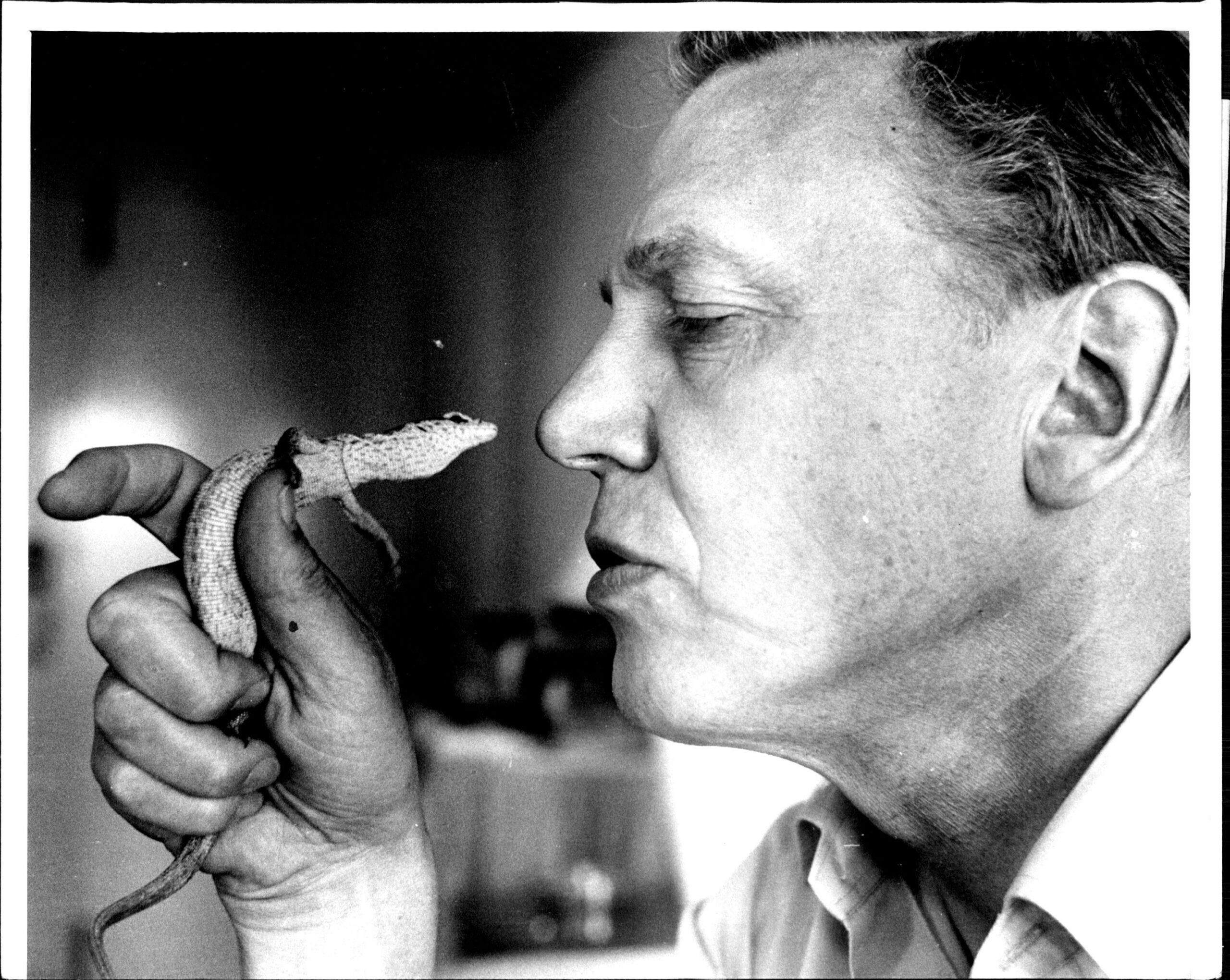
Attenborough will get a nearer take a look at an Australian pygmy goanna on a go to to Sydney in 1984
It is the most relatable factor you’ll ever study Sir David Attenborough: He, too, was adrift in his mid-20s. In 1949, Attenborough labored as a junior editorial assistant for a London academic writer, proofreading youngsters’s science books. He spent his days counting phrases, however largely counting down clocks. He had a diploma in pure science from Cambridge that he’d somewhat naively thought would permit him to conduct analysis in the farthest corners of the world. After Cambridge, he’d been known as as much as the navy; he hoped he can be stationed in a faraway port metropolis like Trincomalee in Sri Lanka. There was romance in these distant lands—much less so in the almost defunct reserve fleet that he was really assigned to in North Wales, stationed lower than 500 miles from the place he was born.
Drudgery led him to reply to a job itemizing in The Times for a BBC radio producer place. The job went to another person, however his software made an impression with the company’s fledgling tv division. It wasn’t an apparent match. He’d solely ever watched a tv program as soon as in his life, at his in-laws’. Still, he nailed the interview and went forward with the coaching, if for no different purpose than that he had a younger household to supply for.
But even early on in Attenborough’s tenure at the BBC workplaces, there was a sense that he felt a calling from out in the wilderness. The community used to do academic packages about animals, certain, however solely to the extent that people would nonetheless be answerable for the atmosphere. Attenborough discovered all of it excruciatingly regimented. He wished to make a change. So he schemed with a buddy, Jack Lester, the reptile curator for the London Zoo, to create a sequence that confirmed how animals have been captured in the wild to be put in a zoo. From that germ of an thought got here Zoo Quest, Attenborough’s first on-screen foray into the world of nature documentary, in 1954.
At final, Attenborough had discovered the technique of exploration he’d been searching for for his whole younger grownup life. He trekked to forests in Sierra Leone, on the lookout for colobus monkeys and white-necked rockfowl. He traveled by way of the island chains of Indonesia in quest of Komodo dragons and birds of paradise. But the position of presenter—the position Attenborough has formed and perfected as a lot as any grasp of their respective area—had by no means been his major ambition. Mary Adams, the pioneering BBC tv govt who’d found Attenborough’s failed radio producer software, thought that his enamel have been too huge for him to be on-air expertise. Attenborough grew to become the presenter of Zoo Quest solely after Lester, the London Zoo curator, was incapacitated by a deadly illness he’d contracted throughout their travels.
Where most narrators invoke an air of credibility by way of vocal prowess alone, Attenborough’s authority enshrouds him like an aura.
Zoo Quest ran for eight sequence, and Attenborough moonlighted as an adventurer as a respite from his day-to-day obligations in the BBC workplace. He briefly resigned from his desk job to pursue a social anthropology diploma at the London School of Economics, solely to be lured again in 1965 to the mothership as an govt for a new channel, BBC Two
It was throughout that point overseeing the programming of a whole tv channel—intuiting the stability of schooling and leisure, the interaction of comedy and drama, sports activities and artwork—that a chrysalis of change started forming round Attenborough. After the success of landmark documentaries like Civilisation and The Ascent of Man, which Attenborough had each commissioned and produced, the BBC’s Natural History Unit started workshopping concepts for a comparable sequence about evolution. The thought they landed on would require a three-year dedication for the presenter. Impossible for Attenborough, given his day job. So the day job must go. “Now there was nothing to prevent me from saying outright that I would dearly like to write and present it,” Attenborough wrote in Life on Air.
For years, exploring and making sense of the pure world had been a form of escape. But this new actuality offered a chance to show that need into his life’s mission. The results of Attenborough’s full-fledged dedication was 1979’s Life on Earth, the Promethean level of origin for all trendy nature documentaries. Charles Darwin printed On the Origin of Species at the age of fifty; Attenborough was 53 when he offered Life on Earth. All of the collected data gained from Attenborough’s time at the BBC had led to this. It was Attenborough’s emergence from his chrysalis.
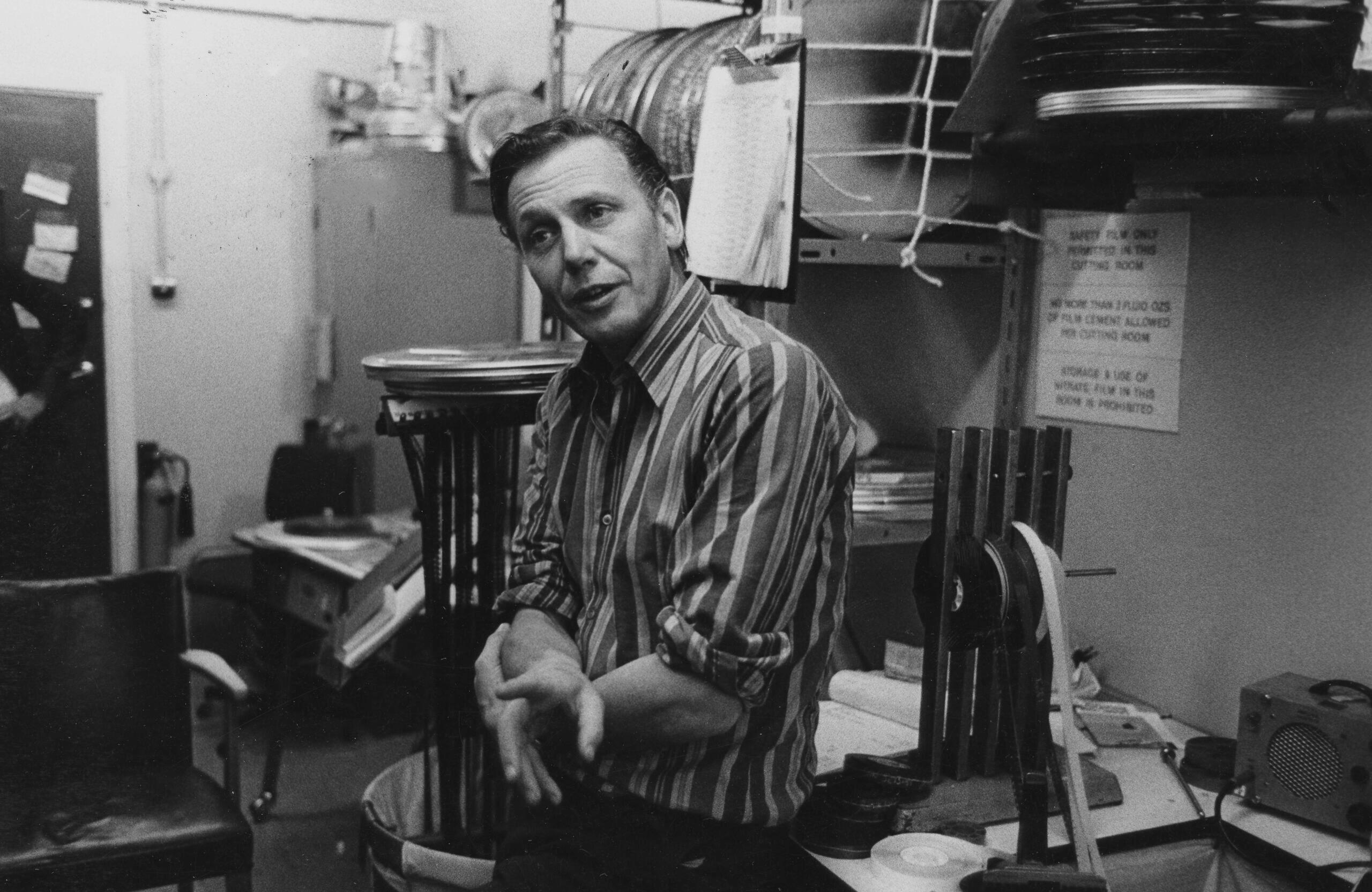
Attenborough in the BBC edit suite following his appointment as the new controller of BBC 2
Life on Earth, throughout its 13 episodes, traced the evolutionary arc of plant and animal life, from the earliest single-cell organisms to the emergence of people. It set the early blueprint for what would turn out to be hallmarks of an Attenborough documentary: affected person supply, state-of-the-art picture seize, and the occasional token of profundity. “If beauty comes from perfection, if grace is a measure of skill, then a bird in the air must be among the loveliest sights in nature,” Attenborough rhapsodized in narration throughout the eighth episode.
But the sequence was immortalized by a candid second of connection in contrast to something televised earlier than. In 1978, Attenborough traveled to the Virunga Mountains of Rwanda in hopes of filming gorillas in the wild—which, at that time limit, had scarcely been achieved. He and the crew labored with primatologist Dian Fossey, who had spent years in Rwanda researching gorilla habits, dedicating her life to their conservation. Upon Attenborough’s arrival, he was knowledgeable of a latest killing of a younger gorilla, Digit, who had developed a bond with Fossey over the years. Poachers had severed Digit’s head and palms to promote them at a vacationer store, Attenborough recalled in Life on Air.
As distrustful as Fossey had grown of outsiders, she agreed to help the crew as a essential mediator. The teams of gorillas in the space had grown accustomed to Fossey and her workers’s presence. Attenborough would should be formally launched by somebody acquainted—it’s the identical conference as in human social interplay. The crew was taught primary decorum: heads must be saved low in deference; stares are interpreted as challenges; fixed burping is a thoughtful motion, because it capabilities to softly announce one’s presence with out triggering a sense of risk.
Attenborough spent a week slowly ingratiating himself, till sooner or later, he pushed previous a tall patch of grass and realized that there was an grownup feminine peacefully grazing simply a few ft away, her toddler youngsters desperate to play with a newfound buddy. The crew behind Attenborough had arrange and was able to movie. The section was initially meant to clarify the evolutionary breakthrough of the opposable thumb, however in the nonetheless intimacy of the second, with the weight of Digit’s loss of life nonetheless lingering, Attenborough dropped the script fully:
The gorilla scene in Life on Earth stands as arguably the simplest supply of his profession. There in the clearing up in the Virunga Mountains, his hushed tone was a signal of respect, to attract as little consideration to himself as potential. Yet his message was all the extra highly effective for it. That whisper would turn out to be a trademark, one he carries with him to today.
There is a picture of David, on his last day in the Virunga Mountains, with a 3-year-old gorilla named Pablo tranquilly resting on prime of him. Just moments earlier, the teenager had been attempting to untie his shoelaces. In his brief time with the gorillas, he’d shaped a bond with the younger one, and he saved abreast of Pablo’s life even after he’d left Rwanda. Little did he know that Pablo would go on to turn out to be the patriarch of the largest gorilla group in the Virunga Mountains to today. The new Netflix documentary A Gorilla Story: Told by David Attenborough weaves collectively almost 50 years between then and now, interspersing clips from 1978, readings from Attenborough’s detailed journal entries from again then, and present-day footage of Pablo’s group.
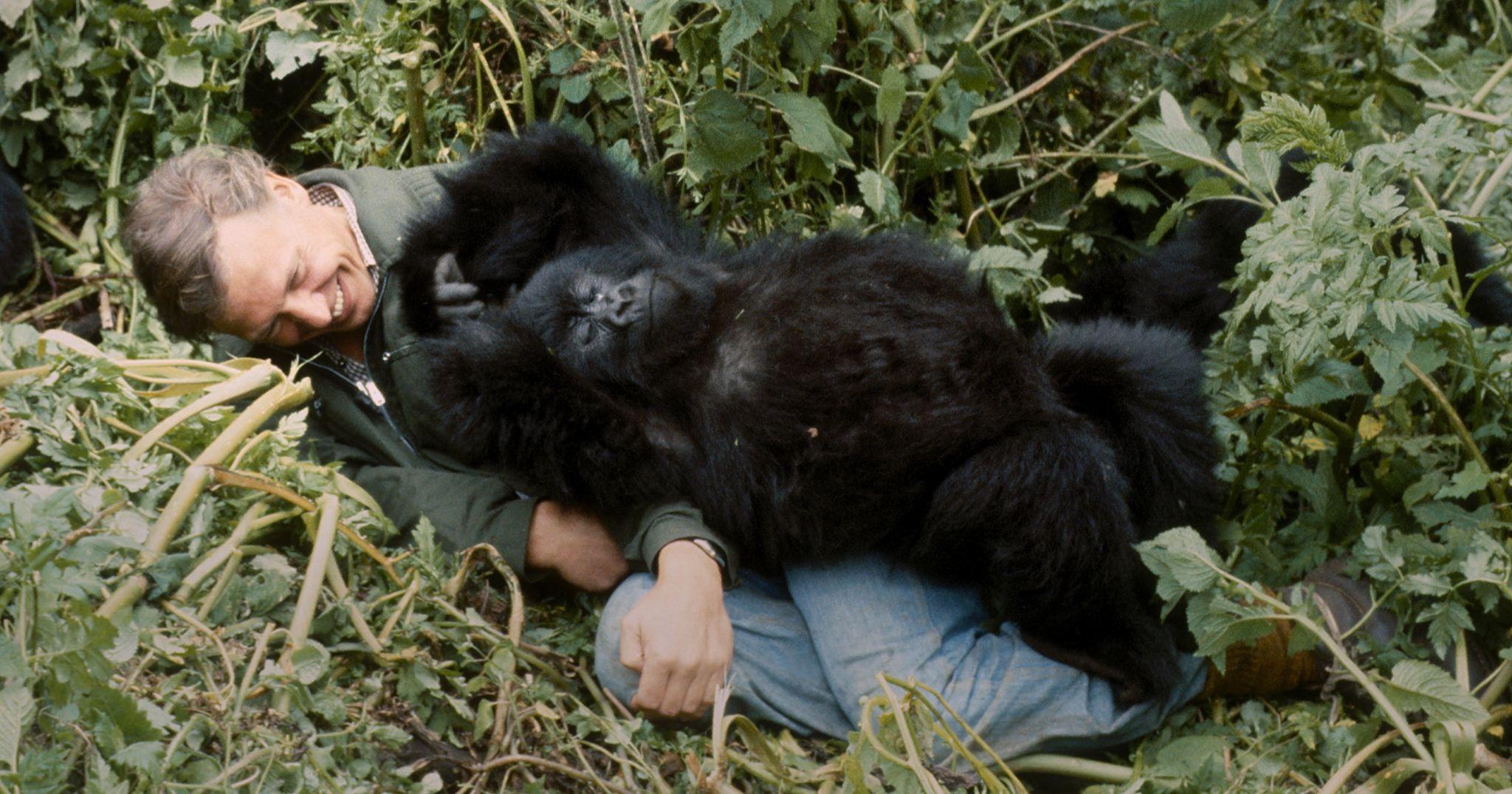
“There is more meaning and mutual understanding in exchanging a glance with a gorilla than any other animal I know,” Attenborough famously stated in the scene from Life on Earth. “So if ever there was a possibility of escaping the human condition and living imaginatively in another creature’s world, it must be with the gorilla.” Yet, by way of A Gorilla Story’s nearly impossibly close-up view of gorilla society, the obtrusive similarities between species turn out to be a form of parable. The documentary highlights a tense switch of energy amid a (comparatively) peaceable collaboration between rivals inside the Pablo group. It additionally, somewhat soberingly, captures an all too acquainted disaster skilled by a younger grownup male and how alienation and ostracization from the bigger group can result in unspeakable acts of brutality.
A Gorilla Story is a number of issues without delay. It is a time capsule celebrating Attenborough’s illustrious run that helps our understanding of the current. Technology has dramatically advanced in that span, as has our grasp of primate habits. The new Netflix documentary references traces from Attenborough’s impassioned Life on Earth monologue, however it leaves different elements out. Although he spoke of “escaping the human condition” again then, even Attenborough was not proof against projection. “It seems, really, very unfair that man should have chosen the gorilla to symbolize all that is aggressive and violent,” Attenborough had stated in 1978. “When that is the one thing that the gorilla is not—and that we are.”
Of course, we now know that to be false. Gorillas actually exhibit tenderness and care of their social bonds, however they, too, comprise multitudes. A Gorilla Story is anchored in violence, each in its decision and in its inevitability. It is a habits that, as has turn out to be more and more clear, binds the whole hominoid household. Earlier this month, a analysis research was printed about a conflict within a previously harmonious group of Ngogo chimpanzees in Uganda that has led to a fracturing into two distinct factions—and the violent deaths of at the very least 28 members (the majority of which have been infants) over the previous eight years. It might be troublesome to not see the Ngogo chimpanzee “civil war” as a portal into the very origins of human battle, earlier than faith, politics, and cultural variations made for handy stress factors. The extra we study our closest kin, the extra there’s left to uncover about the very nature of us all. Attenborough is a residing doc of that pursuit.
“Animals, when they appear on your screen, have a number of qualities that are unique to them,” Attenborough has stated. “They’re not trying to sell you anything, and they’re not telling you lies. They are unpredictable. They are very often new. They’re extraordinarily beautiful. They’re dramatic. And they share something with us, which is life. What more do you want from your television?”
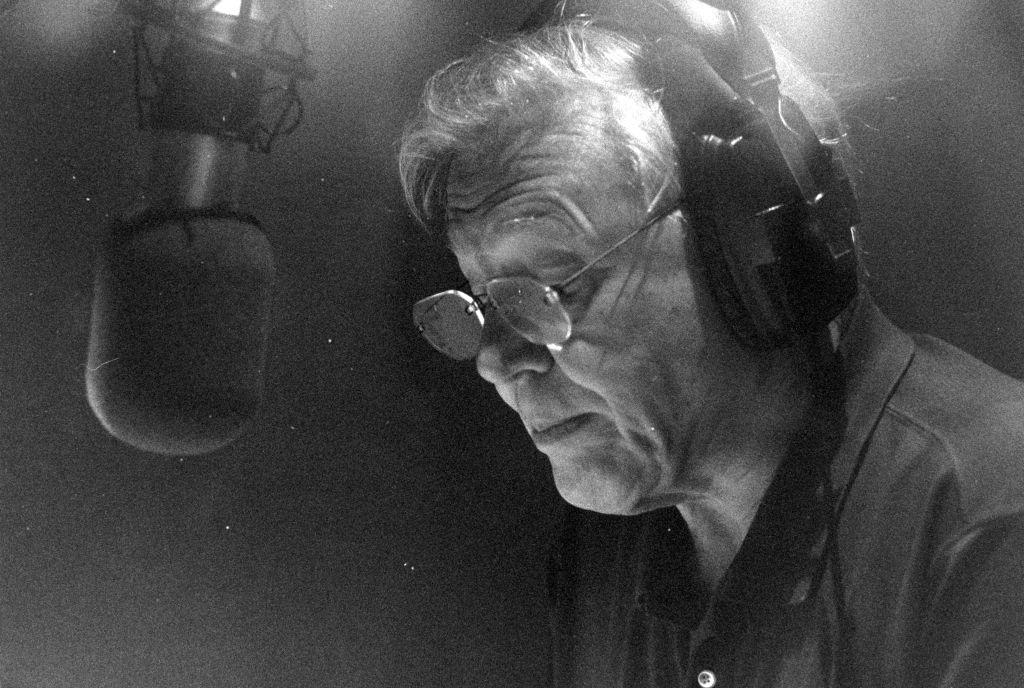
Attenborough in the studio
Attenborough’s on-location presenting days are largely over, so footage of him really interacting with the faraway lands he speaks of is a rarity in new materials. But, for a number of generations at this level, Attenborough has been extra readily recognizable as the benevolent, disembodied voice enjoying off a swirling Hans Zimmer rating. When Attenborough was youthful, there was a set routine on narration days. He would get in his automotive and make the two-hour drive west from his residence in Richmond to Bristol, residence of the finest nature documentary filmmaking on the planet. He’d have his cup of espresso, bang out his traces, have lunch with the crew, and then drive residence.
The COVID-19 pandemic difficult issues. Rather than establishing at a skilled studio, producers gathered at the Attenborough family. The audio engineer Graham Wild would isolate in Attenborough’s yard backyard shed, feeding wires into the home, the place David would report from his eating room. Susan, Attenborough’s daughter, would line the partitions with outdated cover covers to dampen the echoes, then arrange the Zoom on his laptop computer. He’d placed on his headphones and go.
“We did that for, I suppose, 18 months during COVID,” Gunton stated. “And then we all thought, ‘This is actually really nice. It is technically quite efficient.’ And so we’ve never changed it. That’s our default position now. That’s what we do. Well, the only difference is now Graham isn’t in a shed out in the garden; he’s now in the kitchen.”
There is an implicit understanding amongst the viewers that Attenborough is nice at what he does. He must be, after a number of hundred documentaries below his belt. But it’s troublesome to overstate how extraordinary his reward of narration is. He’d spent his early profession beholden to the know-how of the instances. Audio was once recorded on rolls of magnetic 35mm movie that ran for 10 minutes apiece. Because of the price, they weren’t allowed to edit the rolls. “So if you fluffed a word nine minutes in, you had to start again. That usually produced enough adrenaline to enable you to keep your concentration right to the very end,” Attenborough wrote in Life on Air. “Today, it is possible to stop and start after every sentence, but I still think it preferable to record an entire commentary in one run, even if that lasts an hour.”
Turning in a whole documentary episode’s value of voiceovers in a single informal afternoon, although, isn’t anticipated of anybody aside from David Attenborough. “I’ve worked with Hollywood actors on movies I’ve made, and you’ll spend three or four days recording the narration for a 90-minute movie,” Alastair Fothergill, a documentary producer who has labored with Attenborough for greater than 40 years, has said. “David, still, will come into Bristol at 11 o’clock from Richmond and record a 50-minute narration in about an hour and 10 minutes.”
Since manufacturing groups began defaulting to distant Zoom classes, it has turn out to be extra handy to ask bosses and purchasers to see Attenborough’s course of for themselves. “David sits there, and we play the footage. And he’s got the time codes, and he reads against those time codes,” Gunton stated. “And we get to the end in one take, and everybody goes … What?”
Little has modified, whilst Attenborough enters his centenarian years. A Gorilla Story traces an arc of connection and resilience almost 50 years in the making, and it wouldn’t work with out Attenborough’s potential to bridge that point span together with his private recollections. “It’s a miracle that he can perform and communicate and remember with such clear detail and then see the meaning of that in hindsight,” Fothergill stated.
No one does it like David, which raises a query that’s been on the minds of followers, producers, and media companies alike of their decades-long preparation for a world with out Attenborough. How do you change somebody irreplaceable—at a time when he’s wanted greater than ever?
The nature documentary as a kind gained’t finish with Attenborough, however it might lean deeper into the human impulse to conveniently match the content material with the spirit of a superstar narrator. Paul Rudd’s immortally boyish ethos—and portrayal of Marvel’s Antman—made him a becoming, on-the-nose alternative for Apple TV+’s Tiny World. Tilda Swinton’s forays into documentary voiceover work are compelling, maybe as a result of her imaginative character appearing on movie lends itself to narrating one thing outdoors the human paradigm. Morgan Freeman’s dignified efficiency in March of the Penguins made him considered one of the most sought-after voices in the enterprise. More than 20 years later, Freeman stays a staple, most lately heard in final month’s The Dinosaurs, a Steven Spielberg–produced miniseries that collapses and condenses the context and existence of dinosaurs in an effort to current a form of prehistoric Song of Ice and Fire
“I would say that there’s a handful of actors that I’ve worked with who have delivered, I think, extremely good performances,” Gunton stated “And without exception, they will be the ones who say, ‘I don’t know how I can do this compared with David Attenborough.’ They understand what he’s bringing to it.”
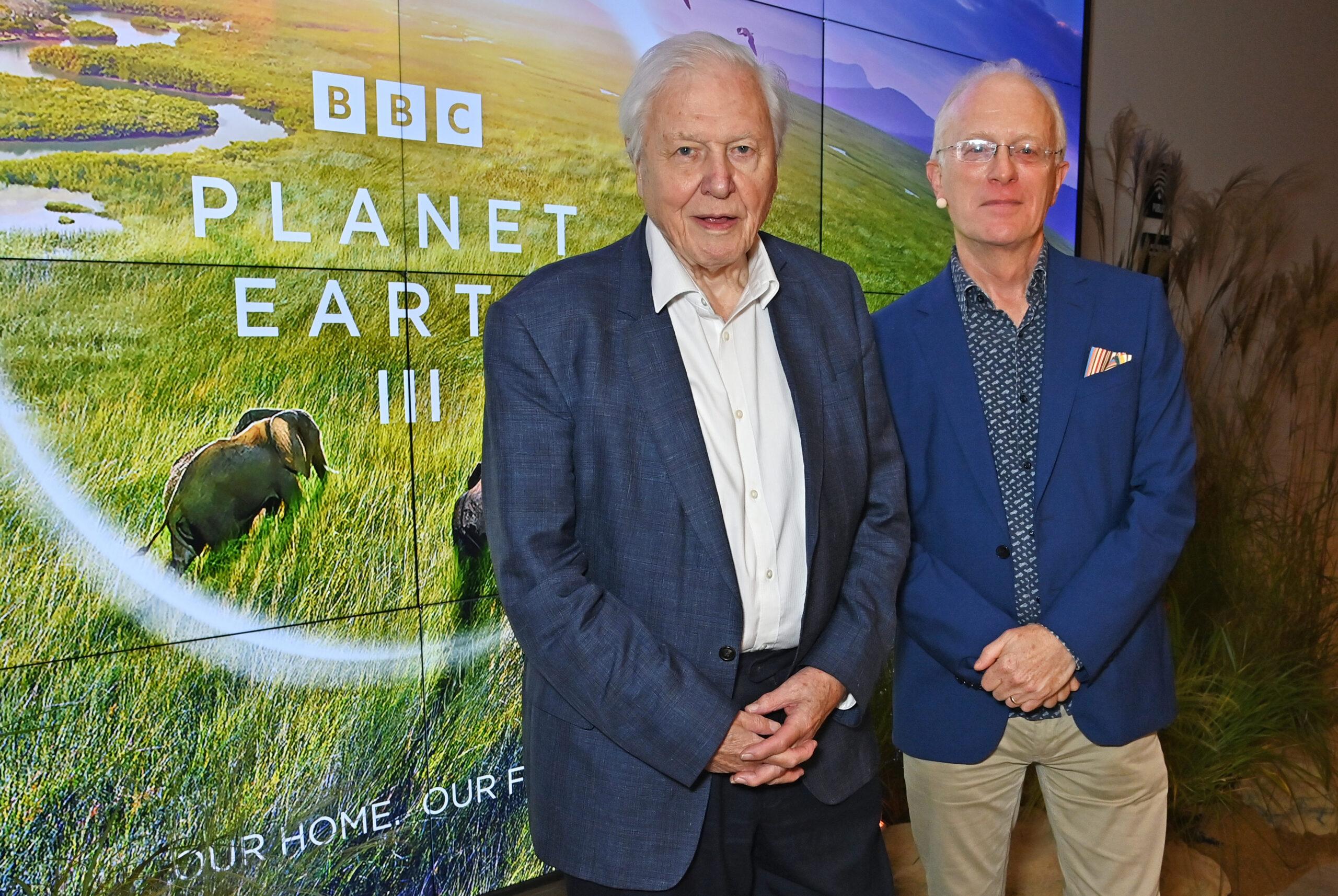
Attenborough and Mike Gunton at the launch of BBC Studios’ ‘Planet Earth III’ in 2023
Attenborough speaks with an accent often called Received Pronunciation, thought-about the British commonplace, connoting excessive social standing and status. For those that are sick versed in the U.Ok.’s many regional accents, Received Pronunciation is the sound of an English individual in your thoughts’s ear. It is the sound of the Lannisters on Game of Thrones, the sound of Shakespeare in a theater. “It can sort of make him sound timeless,” Laurel MacKenzie, an NYU linguistics professor, instructed me. “Which is funny, because Received Pronunciation is really rooted in a particular era.”
There is nobody in the world who has spent extra time inspecting Attenborough’s voice than MacKenzie, who has printed not one however two research on the modifications in his speech over the course of his life on air. MacKenzie’s recent 2025 stud analyzed greater than 50 hours’ (or 504,697 phrases’) value of knowledge collected from 18 totally different Attenborough documentary sequence spanning from 1956 to 2015.
It might be jarring to revisit footage of Attenborough in his 20s, throughout his Zoo Quest days. His diction has all the time been impeccable, however his method of talking was notably totally different then. His vocal pitch was a lot larger. His phrases have been hurried and sharp, emulating the zooming articulation of old-time radio broadcasters. “His accent sort of changes over the course of his lifespan or his career,” MacKenzie stated, “which seems to potentially connect to the way Received Pronunciation has changed over the 20th century.”
MacKenzie observed that Attenborough’s pronunciation was at its most formal at the starting of his profession, which was largely spent interfacing with colleagues at the workplace. The tradition that surrounded him, MacKenzie suspected, had knowledgeable his speech—in spite of everything, Received Pronunciation, for a time, was additionally known as “BBC English.” But by the time Attenborough transitioned to being a full-time presenter in his 50s, the form of cut-glass sharpness in his accent had relaxed. Perhaps in the East African savanna, amongst the vervet monkeys, nobody cares how posh you sound.
David sits there, and we play the footage. And he is bought the time codes, and he reads in opposition to these time codes. And we get to the finish in a single take, and all people goes … What?
Mike Gunton
“I would be very surprised if he’s consciously changed that voice,” Gunton stated. “I just think with exposure to the media and with age and with the range of things he’s doing and also the type of narration, the type of voice he’s bringing to these projects, I think it has evolved into a theatrical voice. He’s learned how to deliver, how to bring punctuation, how to bring the comic timing, how to bring the seriousness, when to give energy, when to give pathos, all those skills that come from a great performer.”
The nice actor Judi Dench has lengthy held admiration for Attenborough, undoubtedly an inspiration for her 2017 BBC documentary, My Passion For Trees. “Judi’s a great fan of David’s delivery, and she says he is as good as any Shakespearean actor. He has got the same range and the same understanding … and I think she’s dead right,” Gunton instructed me.
“But what David has got, this extra ability, is it’s Shakespeare for everyone. A Shakespearean play may not be to everybody’s taste, but David manages to deliver that sort of Shakespeare DNA, but to everybody, irrespective of their background and their age and their perspective.”
Attenborough’s voice just isn’t as pliant because it was in his youthful years, but he has uncommon entry to a dynamic vary of expression that’s solely absolutely revealed itself in outdated age. Attenborough’s patinated voice carries with it a lifetime of witnessing the best risk to the planet—us. It grows stronger as a result of it has to. He just isn’t alone in that regard inside the animal kingdom. A 2011 study discovered that, in African elephant households, herds led by a matriarch older than 60 years have been higher at figuring out and speaking in opposition to predatory threats than herds that includes youthful matriarchs.
“If you go back to the older programs, even on Blue Planet [in 2001], it’s quite a clipped voice,” Fothergill as soon as stated of Attenborough. “It’s now the voice of an older man, but it’s become even more powerful, with a timbre and an emotional resonance.”
But from the place does that energy emerge? A human’s vocal cords are not more than 2 centimeters lengthy, opening and shutting about 200 million instances yearly, in accordance with Trevor J. Cox, a professor of acoustic engineering at the University of Salford. It’s a muscle that may be constructed up, however as with every different muscle, it invariably degrades over time. Around the age of 60, the cords weaken and don’t all the time shut the approach they did earlier than, leaving a small hole. The hole permits air to leak out from the larynx, creating the form of sighing, murmured speech impact that we regularly affiliate with the aged.
From one perspective, dropping one’s full vary of vocal dexterity is proof of human frailty. From one other, it’s a form of relinquishing of self. We are taught to talk up once we’re youthful, to wield and sharpen our voices like weapons, slicing by way of useless air and noise alike, as a technique of asserting our individuality. Call it a perverse romanticism, however there’s additionally one thing gained in ceding some management of 1’s voice, in embracing its fusion with the surrounding air. Perhaps that’s why tales are finest instructed by our elders: Their voices are fairly actually atmospheric, the sum of one thing extra than simply themselves.
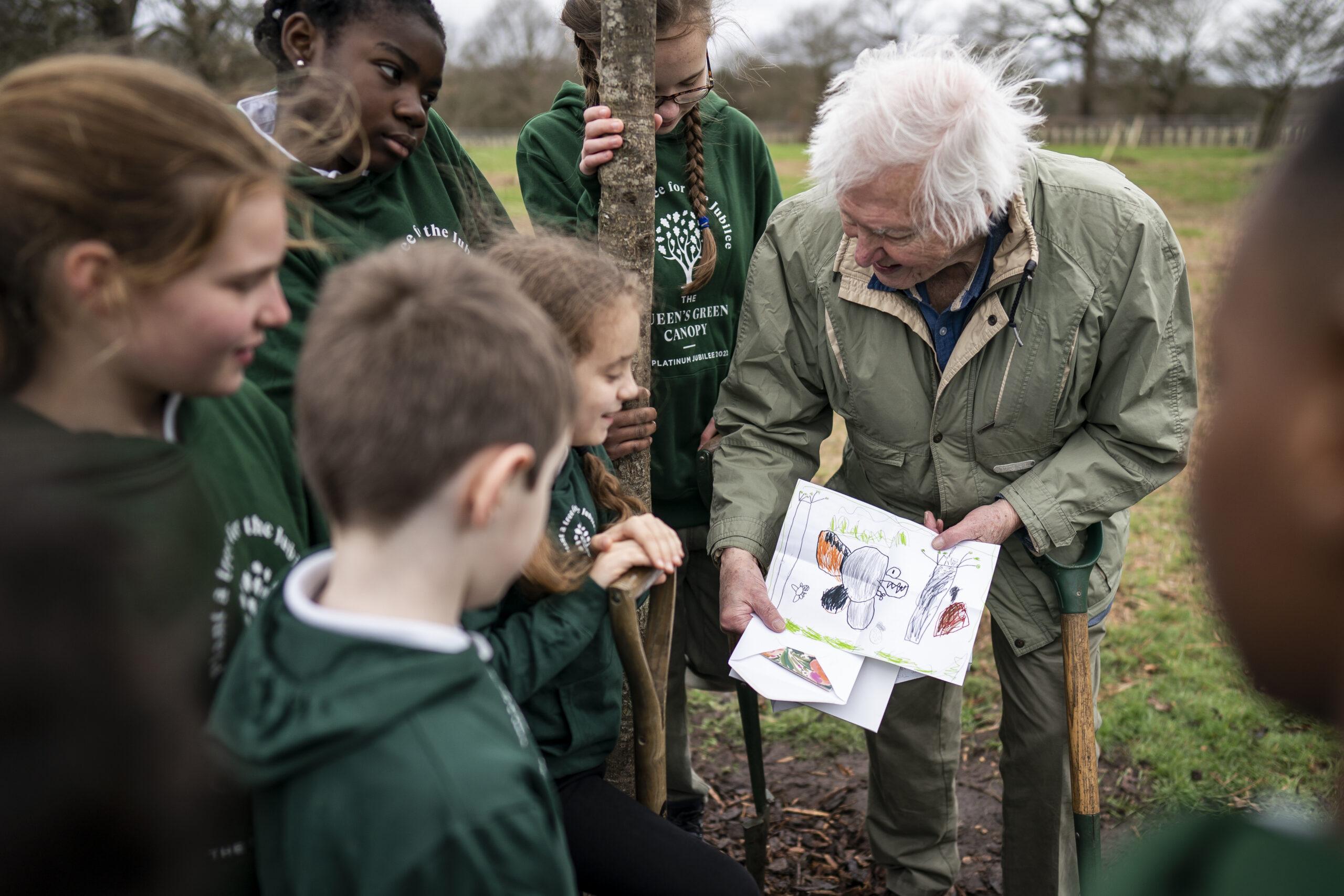
Attenborough crops a tree in honor of Queen Elizabeth II in Richmond Park with schoolchildren from throughout London in 2023
If a single phrase may exemplify the stylistic markers of Attenborough’s voice, it could be daybreak. The first breaking gentle of day, the begin of one thing profoundly vital. The daybreak of a new age. Dawn in the plains of the Serengeti. There is hope embedded in the phrase. It’s a marvel that one syllable from one voice may summon such a cinematic panorama in the thoughts. Only pure to want to inhabit that, if just for a few seconds. So individuals did. Back in the day, the U.Ok.’s earliest residence voicemail methods served as an open mic, of kinds. “The number of people who did a David Attenborough impersonation,” Gunton remembers, “it was just people loved that voice.”
It’s a voice that has been admired and typically imitated for greater than half a century. Attenborough has interfaced with each technological development in filmmaking over every of the previous 4 generations. He has been a a part of the change from black and white to paint; the proliferation of slow-motion and time-lapse picture seize; the use of robotics and distant underwater cameras; the experimentation with 3D, CGI, and 4K drones. Each new development has introduced with it the capability to see the world from a totally different perspective, which has been Attenborough’s guideline his whole life. But as Attenborough approaches the century mark, the most consequential technological development of our day stands in direct opposition to his worldview.
In late 2023, AI programmer Charlie Holtz went viral on social media when he demonstrated a system that narrated Holtz’s actions with an unauthorized synthesis of Attenborough’s voice, as if the programmer have been the topic of a documentary. The consequence was an uncanny, unnerving show of uninhibited entry to a different individual’s likeness, performed for a chuckle In the ensuing 12 months, comparable fabrications of Attenborough’s voice emerged, however in contexts far much less innocuous: Audio clips about Donald Trump’s lawyer common nomination and NATO’s response to impending battle have been rendered in a synthesis of Attenborough’s voice. “Having spent a lifetime trying to speak what I believe to be the truth,” Attenborough instructed BBC News, “I’m profoundly disturbed to find that these days my identity is being stolen by others—and greatly object to them using it to say whatever they wish.”
Judi’s a nice fan of David’s supply, and she says he’s pretty much as good as any Shakespearean actor. He has bought the identical vary and the identical understanding … and I believe she’s useless proper.
Gunton
Sarah Barrington, an AI researcher at UC Berkeley, has spent the previous few years targeted on deepfake detection and digital forensics, with the hopes of effecting coverage and regulatory modifications that may create safeguards for each individual’s likeness, in all its representations. “I think the case of David Attenborough’s voice is so interesting because it’s not just about identity, not just about taking his identity, but that voice has weight,” she instructed me. “That voice means something in society. Hearing that voice with certain types of content literally changes the meaning of that content.”
ElevenLabs, the AI voice-generation platform utilized in Holtz’s demo, claims to have the ability to create a skilled voice clone “virtually indistinguishable from the original speaker” with simply half-hour of audio samples. Its much less exact “instant” mannequin requires not more than 5. That’s a drop in the bucket of Attenborough’s immense catalog. The firm might have adjusted its phrases and situations since Holtz’s Attenborough AI stunt to skirt any legal responsibility on its finish, however the underlying know-how is on the market for anybody to make use of—and exploit. “The amount of content that’s out there means that fine-tuning [a large language model] to be able to reproduce exactly the words he’d say is pretty feasible,” Barrington stated. “He feels so unprotected in that sense, doesn’t he?”
Attenborough has been on this planet lengthy sufficient to surmise how this may play out. An unregulated business runs rampant, searching for forgiveness somewhat than permission. It goals to turn out to be a staple in the day-to-day lives of many, to the level that it may be troublesome to recollect life earlier than its proliferation. There is a positivity bias that comes from its expedience and comfort as a service and commodity. And when that expedience and comfort are taken with no consideration, ethics might be ignored, even deserted. Using a voice clone of Attenborough’s obfuscates the origin level the identical approach the business meatpacking business, the fast-fashion garment and textile business, or Amazon does. When a divide is created between the shopper and the supply, it’s all too simple to proceed with out contemplating the ramifications.
In her research, Barrington discovered that people are far much less geared up to detect AI-produced audio in contrast with AI-produced video. And it’s getting more durable and more durable to note the distinction by the day. Just a few years in the past, AI fashions weren’t in a position to replicate regular respiratory patterns very properly, leading to speech with out pure pauses. Now, audio snippets of as much as 10 seconds can sound extraordinarily lifelike, however the longer the audio runs for, the simpler it’s to detect some peculiarities. Over a 30-second span, the lack of pitch and tonal variations turns into extra obvious. In different phrases, AI degrades and falters precisely at the level when Attenborough’s mastery turns into peerless. “You change the pace, you change the timbre, you change the mood, and the commentary has organic flow,” Attenborough as soon as instructed The Guardian. “If the last sentence ended 10 seconds ago rather than one minute ago, you start in a different kind of way. I don’t think other people do that. It’s a craft, and I quite enjoy it, actually.”
Attenborough delivers traces from his scripts with musical compositions coming by way of his headphones and documentary footage performed in actual time, permitting him to calibrate to the audiovisual panorama being constructed by the producers. Any of the components on their very own can be inspiring, however the approach Attenborough frictionlessly layers ethos, pathos, and logos brings new dimension to the tapestry. “I don’t think the AI will be able to do that yet because that comes from a knowledge which is being expressed instantly,” Gunton stated. “When he’s reading the narration, of course the words are written on the page, but what he’s bringing to the delivery is not just I’m going to say those words, but it’s a deep knowledge of what those words mean, what that sentence means, and how it’s constructed.
“It’s not an iteration,” Gunton stated. “It is a performance.”
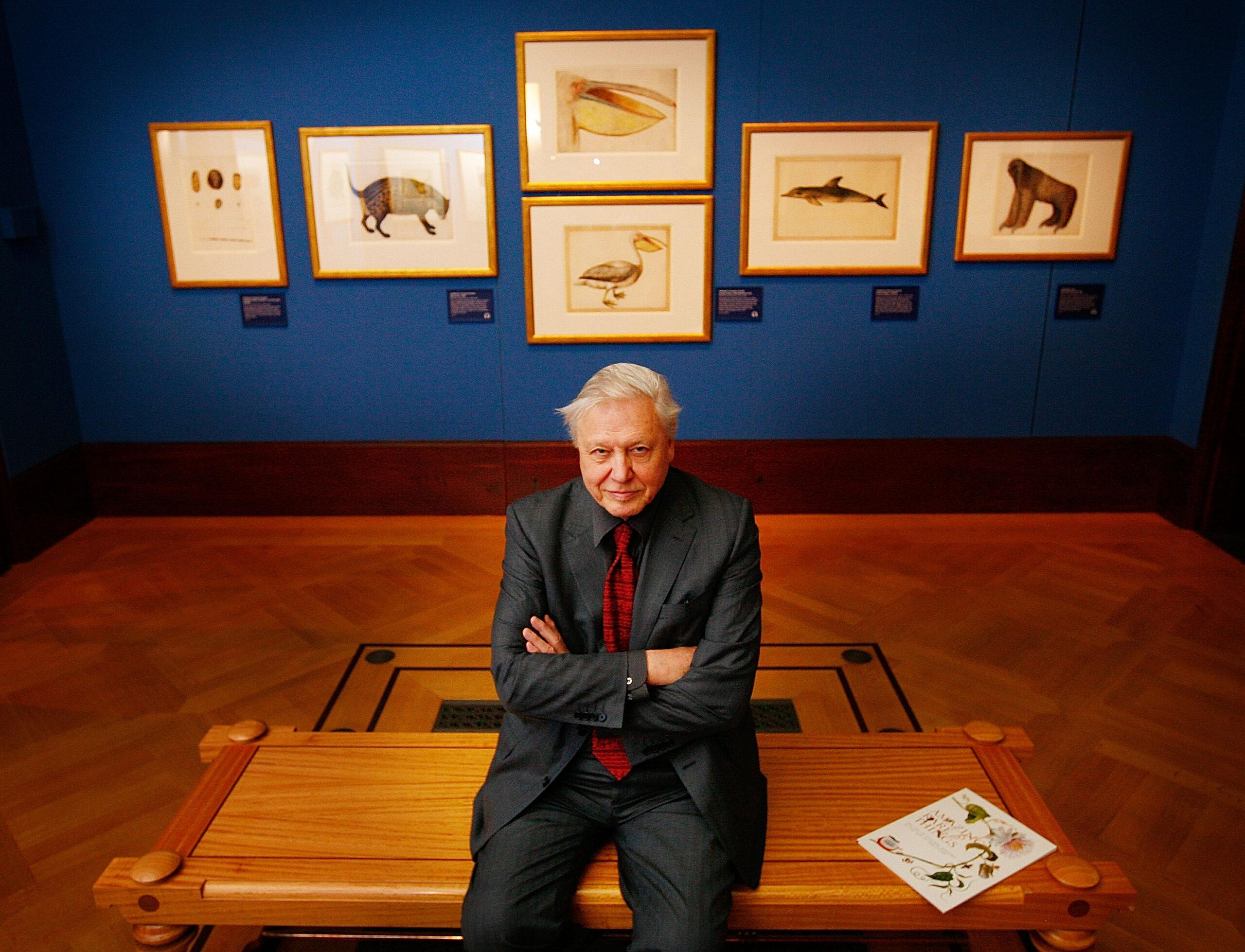
Attenborough in Buckingham Palace
At his finest, Attenborough reminds us that there are pure wonders past our comprehension and that, regardless of our collective self-absorption, we’re not the middle of the universe. Standing subsequent to the towering clay spires at the finish of the termite scene in The Trials of Life, Attenborough leaves the viewer with a little bit of a parting shot. “We might like to think that we are the most accomplished architects the world has ever seen, but if this was built in human terms, with every worker termite the size of me, then it would stand a mile high. And we haven’t done that yet.” Four a long time later, we’ve reached only halfway.
He’s spent his whole life pushing again in opposition to the anthropocentric view of this world he was introduced into. Two years earlier than Attenborough was born, a 1924 silent documentary known as The Epic of Everest was launched, detailing the expedition of George Mallory and Andrew Irvine to the summit of Mount Everest. Not 30 seconds into the documentary, a daring assertion seems on the display screen: “Since the beginning of the world men have battled with Nature for the mastery of their physical surroundings. Such is their birthright, and such is their destiny.”
It stands in stark distinction to what Attenborough has to say at the finish of Ocean With David Attenborough, a latest National Geographic documentary made greater than 100 years later. “When I first saw the sea as a young boy, it was thought of as a vast wilderness to be tamed and mastered for the benefit of humanity,” Attenborough says. “Now, as I approach the end of my life, we know the opposite is true. It is my great hope that we all come to see the ocean not as a dark and distant place with little relevance to our life on land, but as the lifeblood to our home. I’m sure that nothing is more important. For if we save the sea, we save our world.”
None of Attenborough’s documentaries in the previous have extra clearly outlined the extent of the destruction happening in our world, and none have extra plainly acknowledged his personal mortality. He has borne witness to the incalculable injury completed to rainforests and reef methods, websites of the densest biodiversity in the world. He has additionally witnessed triumphs in a few of the most unbelievable pure restoration efforts in human historical past—nowhere close to sufficient to undo the hurt precipitated, however sufficient to take care of a measure of hope in tomorrow. After evading the specifics of local weather disaster for thus lengthy, Attenborough has lastly lent his voice to the urgency of environmentalist efforts in his nonagenarian years—in spite of everything, old age should burn and rave at shut of day. All these years later, what a voice it nonetheless is, weathered however enduring. Not in contrast to the Earth itself. Attenborough’s signature whisper is a gesture towards decentering humanity and all the dominance it has staked over the pure world. It units the stage, then cedes it.
“He’s turned into a person who almost speaks for the planet,” Gunton stated. “And I guess, maybe, subconsciously has adopted that persona in his voice.”

Danny Chau
Chau writes about the NBA and gustatory pleasures, amongst different issues. He is the host of ‘Shift Meal.’ He is predicated in Toronto.