Downtown SF office tower draws zero bids in foreclosure auction
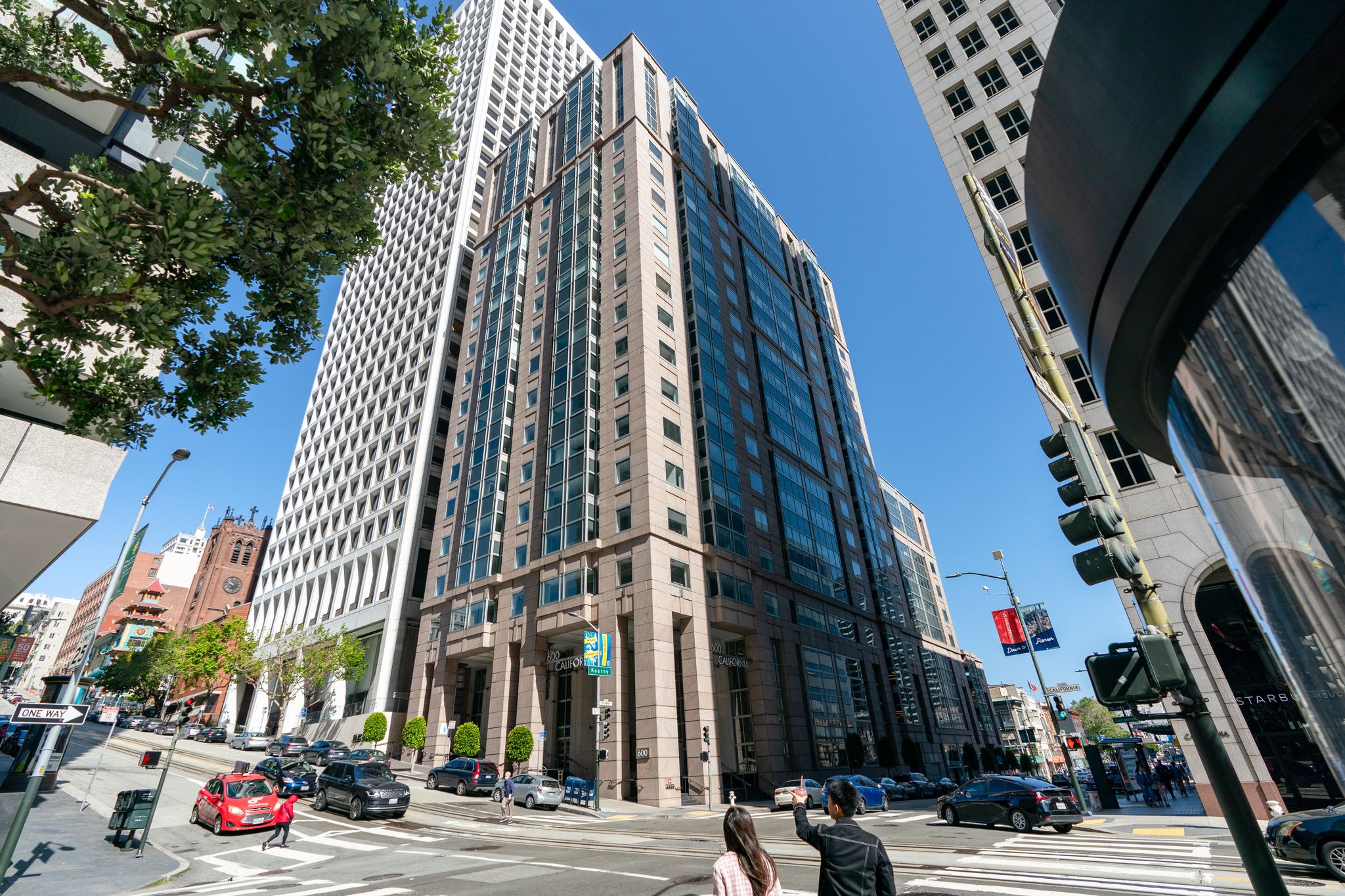

The former WeWork headquarters at 600 California Street in San Francisco was up for auction final week.
One of San Francisco’s notable office towers was up for auction final week, a 20-story, 360,000-square-foot Class A constructing on probably the most coveted corridors in the North Financial District. Nobody who confirmed as much as the stretch of sidewalk in the shadow of City Hall the place the sale was held Thursday was there to bid on the polished, quietly assertive constructing that was as soon as valued at over $320 million.
It’s a little bit of a reckoning for the property at 600 California St., which was tied to a distressed $240 million mortgage and pushed into receivership after its former anchor tenant WeWork stopped paying hire three years in the past. With no contenders stepping ahead to supply bids, Dallas-based Lone Star Funds grew to become the official proprietor of the property, after the personal fairness group paid roughly $130 million to acquire the debt in January from Goldman Sachs, the unique lender.
The quiet transaction felt nearer to an informal curbside deal than a high-stakes switch of a notable piece of the town’s skyline. Some market individuals identified that 600 California’s anticlimactic sale underscores continued weak point in the office market, difficult claims of full restoration.
Article continues under this advert
Within minutes, Lone Star, which declined to remark, formally took possession of 600 California by means of foreclosure, and in doing so, appeared to check the constructing’s perceived worth. Appraised at $109 million in 2024 — a close to 70% drop from 2019 — the group positioned a credit score bid of $216 million on the property, basically utilizing the debt it had already bought at a reduction to bid on the constructing.
“Let’s start with the biggest loan first — assuming none of you are here for that?” the auctioneer mentioned to the group of property hunters gathered round him. Had outdoors bidders proven as much as the auction, they might have been required to furnish an instantaneous deposit and proof of funds, with out the chance to conduct bodily due diligence.
In the top, Lone Star took over the largely vacant tower for an estimated $361 per sq. foot, due to the loan sale brokered earlier this year by actual property agency Newmark.
The auction successfully wrapped up the spectacular unraveling of 600 California, a decline tied in no small half to WeWork, the eleven high-flying versatile office area supplier based by Adam Neumann and Miguel McKelvey that briefly reigned because the nation’s most precious startup. WeWork’s involvement with 600 California got here as its personal valuation peaked at $47 billion in the years main as much as the pandemic, and was moderately uncommon.
Article continues under this advert
The firm created WeCap, shorthand for WeWork Capital Advisors, an in-house funding arm set as much as enable WeWork to maneuver past leasing and working office area to proudly owning it extra straight. Launched with a $1 billion fairness infusion from one of many world’s largest pension funds, WeCap was purported to grow to be a $2.9 billion office funding automobile, however rapidly fell wanting that massive imaginative and prescient, which was overshadowed by WeWork’s failed IPO in 2019.
WeCap started buying buildings that WeWork would occupy as a tenant, together with the California Street tower, which it acquired for roughly $900 per sq. foot as 2019 drew to an in depth. By then, WeWork’s fast development spurt had already resulted in the corporate working a number of areas in San Francisco, together with at 600 California, the place it grew its footprint to almost 200,000 sq. ft.
WeWork’s core enterprise mannequin of signing long-term leases, sometimes between 10 to fifteen years, and reworking its areas into versatile coworking places of work for which it offered shorter-term memberships and licenses, was akin to subleasing office area at a premium. While a profitable mannequin in flush instances when occupancy was excessive, this strategy grew to become its “cardinal error” because the pandemic hit, leaving WeWork with “long-term liabilities and short-term income,” in accordance with veteran San Francisco business dealer Charlie McCabe.
As office demand dropped in the course of the pandemic, WeWork owed landlords hire at the same time as desks sat empty. The twist at 600 California was that WeWork was WeCap’s anchor tenant.
WeCap and its companion for 600 California, Rhone Group, were sued in 2023 by representatives of Goldman Sachs for falling behind on their mortgage funds in the tower months after WeWork stopped making hire funds, though the corporate continued to report spikes in demand for its versatile areas, with WeWork stating that it accounted for 13% of conventional office area leased in San Francisco on the finish of 2022. A yr later, WeWork filed for chapter 11 chapter.
Article continues under this advert
McCabe, the business dealer, mentioned that WeWork’s “2023 bankruptcy implosion continues to echo in San Francisco,” and that the 600 California tower is proof of that.
The constructing’s foreclosure sale “dispels the perception that the local commercial property market has completely bounced back,” McCabe mentioned, including that the tower joins 5 different “troubled commercial properties over 250,000 square feet in size” that modified possession this yr.
But WeWork, which managed to retain a smaller footprint throughout the tower, seems to be betting on a comeback.
“With the sale to Lone Star Funds, we are pleased to see a path to conclusion in ownership at 600 California St.,” a spokesperson mentioned in a press release to the Chronicle. “Our location at the building has seen incredibly strong demand, with footfall at our space up 34% since the start of the year, and we look forward to partnering with them on our continued operations.”
Article continues under this advert