Travelers from DRC, South Sudan and Uganda to land at Dulles – NBC4 Washington
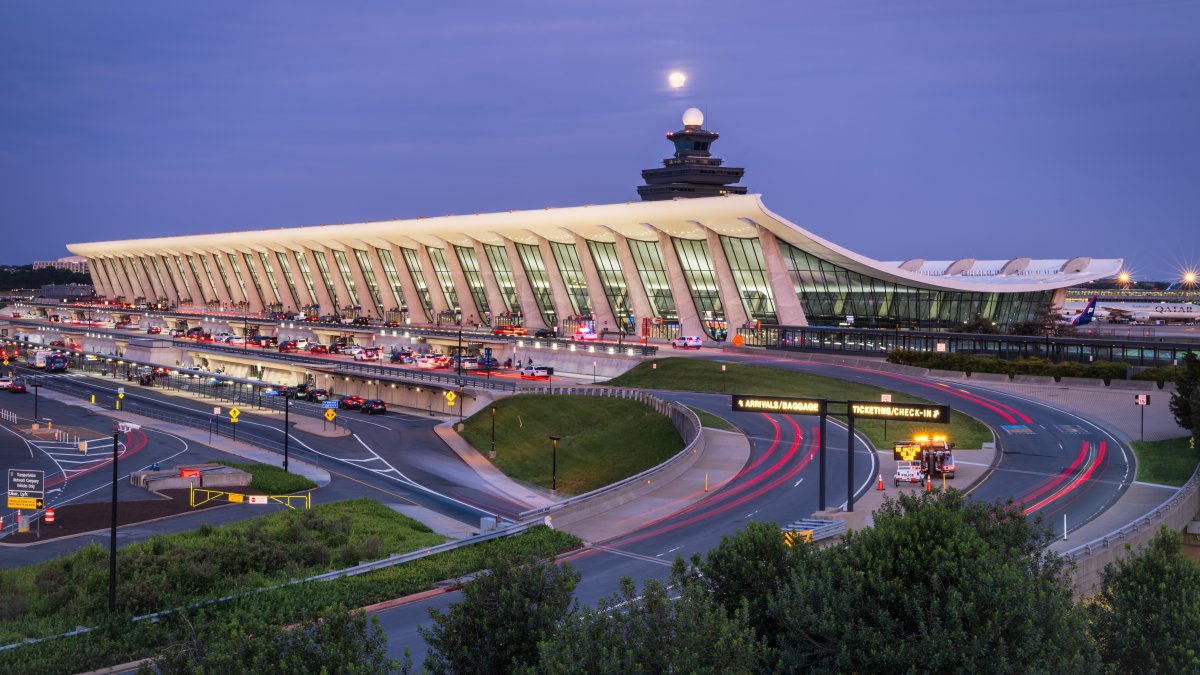
Americans coming to the US from some African nations will likely be routed by Dulles International Airport for enhanced screening amid an Ebola outbreak that has killed almost 140 folks, in accordance to the Department of Homeland Security (DHS).
The DHS mentioned that as of Thursday all US-bound American residents and everlasting residents who’ve been in Congo, Uganda or South Sudan within the earlier 21 days should solely enter by Dulles.
In a memo obtained by NBC Newsthe DHS described Dulles because the airport “the place the US authorities is focusing public well being assets to implement enhanced public well being measures.”
The Centers for Disease Control and Prevention mentioned there are not any confirmed instances of Ebola within the US
The World Health Organization (WHO) experiences there are actually greater than 600 suspected Ebola instances amid the continuing outbreak, and 139 folks have died from the virus, largely within the DRC.
The CDC, in an order signed by National Institutes of Health Director Jay Bhattacharya, mentioned screening is vital to stop the virus inflicting this Ebola outbreak, Bundibugyo, from getting into the United States.
“The interconnected nature of global air travel therefore presents a credible pathway for Bundibugyo virus disease importation into the United States, underscoring the importance of aggressive surveillance, traveler monitoring, airport screening, healthcare preparedness, and rapid containment capabilities,” the doc mentioned.
Concerning pressure of virus at heart of outbreak that began weeks in the past
Health officers imagine the Ebola outbreak in Congo began weeks in the past and say they have not recognized the supply.
The outbreak has been declared a public well being emergency of worldwide concern by the WHO.
The virus inflicting this outbreak in Congo is much less widespread than others that trigger Ebola illness, which is complicating the response as a result of there are not any particular remedies or vaccines.
“There’s nothing even close to ready for clinical trials,” mentioned Dr. Celine Gounder, an infectious illness specialist and epidemiologist who handled sufferers in West Africa through the 2014-2016 Ebola epidemic. “And so that means responds, healthcare workers and other aid workers are really back to the basics.”
Dr. Vasee Moorthy, a particular adviser within the workplace of the WHO chief scientist, mentioned essentially the most promising candidate vaccine to deal with Bundibugyo wouldn’t be out there for at least six to 9 months.
The virus is unfold by shut contact with sick or deceased sufferers’ bodily fluids, equivalent to sweat, blood, feces or vomit. Healthcare employees and members of the family caring for sick sufferers face the best danger, specialists mentioned.
“So very often we see doctors and nurses among the first to be infected and to die,” mentioned Gounder, editor-at-large for public well being at KFF Health News.
From the few outbreaks well being specialists have seen, Bundibugyo could be barely much less lethal than Ebola virus or Sudan virus.
“I think a 30%-plus mortality rate is still quite scary, but it’s hard to say with a lot of precision because we don’t have a lot of experience,” Gounder mentioned.
How public well being employees are attempting to include the outbreak
Health employees are actually working to discover and isolate instances, hint their contacts and educate folks about how to keep away from the virus. In the West African Ebola epidemic, guaranteeing secure strategies of burial was key to stopping the unfold, Gounder mentioned, as a result of folks had been getting sick from making ready their family members’ our bodies for funeral rites. Making certain well being employees have correct protecting gear can also be vital, specialists mentioned.
“Of course, it’s problematic because vaccines are some of our best tools for combating infectious diseases,” mentioned Lina Moses, an epidemiologist and illness ecologist at Tulane University. But different public well being instruments — public schooling, contact tracing, fast testing — nonetheless work, she mentioned.
“It’s important to keep in mind that every single Ebola outbreak that has occurred in the (Democratic Republic of the Congo) — we’re on our 17th now — has been stopped,” she mentioned.